What AI compliance challenges do GDPR, HIPAA, and the EU AI Act pose?


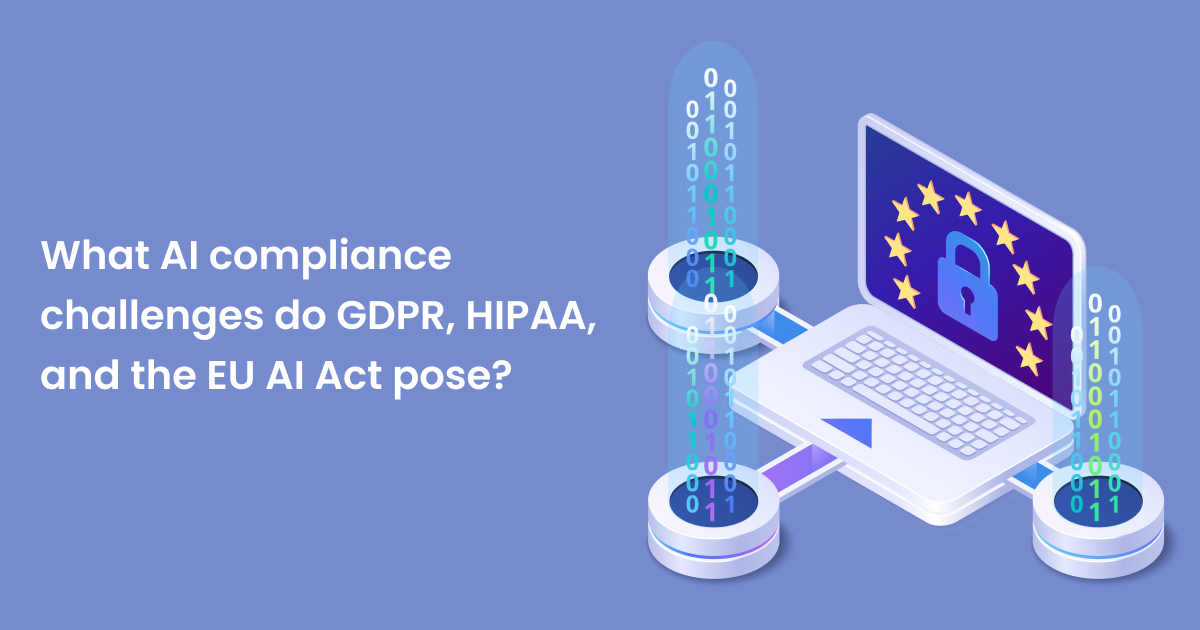
Businesses deploying AI today face pressure from strict global regulations like GDPR, HIPAA, and the EU AI Act. Each introduces unique obligations around data handling, privacy, explainability, and model accountability. The challenge is not just meeting the rules but proving ongoing compliance in a landscape where standards keep evolving.

These frameworks push companies to rethink how AI models are built, trained, tested, and monitored. GDPR focuses on lawful data use and user rights. HIPAA demands strict safeguards for health data. The AI Act introduces risk tiers and operational requirements that influence everything from dataset design to model output documentation. This mix creates complexity, especially for teams without legal, data, and ML expertise.
Many organizations turn to compliance-ready AI hiring because trained experts understand how to align technical workflows with regulatory expectations. They help shape data pipelines, model validation processes, and deployment checks that satisfy audits and reduce penalties. They also ensure that transparency documents, logs, and risk assessments meet the required standards.
Regulations now expect more than general cybersecurity. They ask for algorithmic accountability, clear model behavior justification, and continuous governance. This means technical teams need to collaborate closely with legal and compliance specialists who know GDPR, HIPAA, and AI Act interpretations.
How do you hire AI experts experienced in regulatory compliance?
Hiring compliance-ready AI talent starts with identifying whether the expert has hands-on experience with GDPR, HIPAA and the AI Act, not just theoretical knowledge. Companies usually look for specialists who understand data handling rules, risk classifications and documentation standards that regulators require.
To make hiring easier, many teams use structured screening steps such as:
- Checking prior work on privacy-sensitive AI systems
- Reviewing familiarity with region-specific regulations
- Assessing knowledge of risk classifications under the EU AI Act
- Verifying experience with secure data pipelines and model governance
What processes ensure AI systems meet legal standards?
Compliance comes from embedding governance into every project stage rather than checking it at the end. A clear framework ensures the model, data and documentation align with legal obligations throughout development.
The core processes usually include:
- Mapping data flow and identifying sensitive data before model training
- Defining the lawful basis for data use and retention
- Classifying the system under AI Act risk categories
- Performing bias, drift and explainability checks
- Applying privacy-preserving methods like anonymization or differential privacy
- Maintaining detailed documentation and audit trails
- Setting compliance-based acceptance criteria prior to deployment
Why pre-vetted, certified AI experts reduce compliance risk?
Working with certified AI governance specialists helps teams avoid penalties, reduce operational risk, and maintain audit readiness. These experts understand how regulatory frameworks treat data-driven systems and ensure models follow approved practices from day one.
Since these professionals have experience with privacy laws, risk management, and industry compliance standards, they reduce guesswork and minimize avoidable mistakes. Their guidance shapes data protection, documentation quality, and model safety checks.
Pre-vetted experts are particularly valuable for GDPR and HIPAA projects because violations can lead to legal exposure. Their training allows them to anticipate issues like improper consent handling, unmonitored drifts, undocumented decisions, and poor access control.
They also streamline collaboration between legal, engineering, and business teams. Their understanding of compliance ready AI hiring practices ensures smoother scoping, clearer requirements, and better system integrity throughout the project lifecycle.
How to audit AI compliance continuously post-deployment?
AI compliance does not stop after the system goes live. Continuous auditing protects organizations from evolving risks, new regulations, and unexpected model behaviors. The idea is to keep both the model and the documentation aligned with legal expectations at all times.
Post-deployment audits include monitoring accuracy, drift, bias levels, and data access patterns. Logs are reviewed to ensure decisions remain explainable. For healthcare and finance use cases, HIPAA and GDPR require regular checks of safeguards and encryption standards.
Teams use AI compliance audit tools to track changes, generate reports, and detect anomalies. These tools support risk scoring, benchmark comparisons, and alerting. With automated evaluations, issues can be flagged early before they turn into violations.
Companies also schedule human reviews, especially for AI Act high risk systems. Governance specialists examine model behavior, validate documentation, and ensure corrective actions are being implemented. Continuous audits maintain trust and make regulatory inspections simpler.
Final Words
Ensuring AI systems meet GDPR, HIPAA, and AI Act requirements requires more than technical expertise; it demands structured processes, continuous monitoring, and collaboration with compliance-focused specialists. By hiring pre-vetted, certified AI experts, implementing clear workflows, and conducting ongoing audits using AI compliance audit tools, organizations can reduce legal risks, maintain transparency, and ensure their AI solutions remain trustworthy and regulation-ready throughout their lifecycle.

FAQs
Author
Ravikumar Sreedharan

CEO & Co-Founder, Expertshub.ai
Ravikumar Sreedharan is the Co-Founder of ExpertsHub.ai, where he is building a global platform that uses advanced AI to connect businesses with top-tier AI consultants through smart matching, instant interviews, and seamless collaboration. Also the CEO of LedgeSure Consulting, he brings deep expertise in digital transformation, data, analytics, AI solutions, and cloud technologies. A graduate of NIT Calicut, Ravi combines his strategic vision and hands-on SaaS experience to help organizations accelerate their AI journeys and scale with confidence.
Latest Post
AI Freelance Rates in 2026: How Much AI Freelancers Earn
AI Freelancing Trends in 2026: How AI Is Changing Freelancing