Collaboration Between AI Engineers and Product Managers in AI Product Development : Making It Work


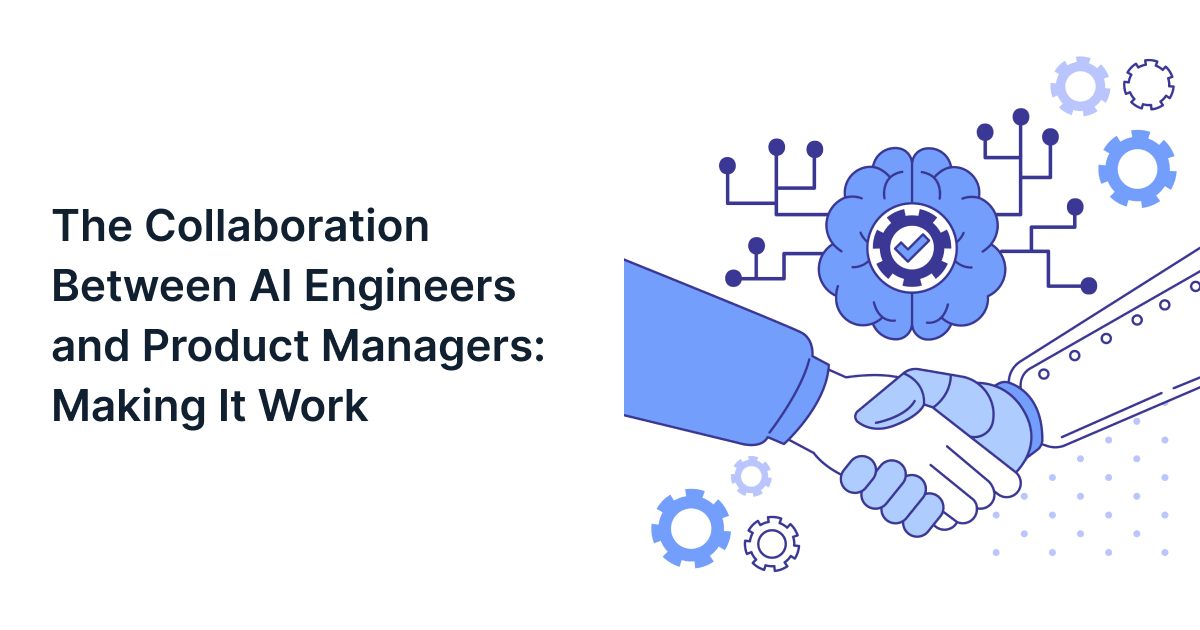
As AI becomes central to modern products, the relationship between AI engineers and product managers has become one of the most important, and most challenging, collaborations inside organizations. AI systems behave differently from traditional software. They learn from data, evolve over time, and produce probabilistic outcomes. This changes how products are planned, built, and improved.
Strong collaboration between AI engineers and product managers is no longer a “nice to have.” It directly determines whether AI features deliver real value or remain impressive demos that never scale.
Why AI PM Collaboration Is Uniquely Challenging
In traditional product development, PMs define requirements and engineers implement them. AI blurs this boundary.
Key challenges in AI PM collaboration include:
- Uncertainty in outcomes and timelines
- Heavy dependency on data quality and availability
- Trade-offs between accuracy, latency, cost, and explainability
- Misaligned expectations about what AI can realistically deliver
When alignment is weak, teams often ship features that are technically sound but poorly adopted, or strategically strong ideas that are technically infeasible.
Clarifying Roles Without Creating Silos
Effective collaboration starts with role clarity.
Product managers are responsible for:
- Defining user problems and business outcomes
- Prioritizing AI use cases based on value, not hype
- Translating business goals into measurable success metrics
AI engineers are responsible for:
- Designing and building models and pipelines
- Explaining technical constraints and trade-offs
- Ensuring models are scalable, reliable, and maintainable
The collaboration works best when PMs do not over-specify solutions and engineers do not operate in isolation. Mutual respect for each other’s expertise is foundational.
Aligning Early on AI Feature Discovery
Many AI failures start during AI feature discovery, not execution.
Best practices include:
- Involving AI engineers early in ideation, not after decisions are finalized
- Validating whether AI is the right solution for the problem
- Exploring data availability before committing to a roadmap
Early collaboration prevents teams from investing months in ideas that are either technically unrealistic or unnecessarily complex.
Building a Shared Language Between PMs and AI Engineers
One of the biggest friction points is communication.
PMs often speak in terms of users, value, and outcomes. AI engineers think in terms of data, models, and performance metrics. Bridging this gap requires a shared vocabulary.
Effective teams:
- Translate accuracy metrics into user impact
- Frame technical constraints in product terms
- Document assumptions clearly on both sides
This improves communication between PM and AI devs and reduces misinterpretation during planning and reviews.
Designing an AI Roadmap With Engineers, Not for Engineers
Traditional roadmaps assume deterministic delivery. AI roadmaps must account for experimentation and learning.
A strong AI roadmap with engineers includes:
- Discovery and data exploration phases
- Experimentation milestones instead of fixed feature promises
- Clear go/no-go decision points
- Time for iteration and improvement after launch
When AI engineers are involved in roadmap creation, timelines become more realistic and delivery more predictable.

Managing Trade-offs Together
AI product decisions often involve trade-offs:
- Accuracy vs latency
- Personalization vs privacy
- Automation vs human oversight
These trade-offs should never be decided by PMs or engineers alone. Joint decision-making ensures alignment between user experience, business goals, and technical feasibility.
This is where AI PM and engineering alignment becomes critical.
Working as Cross-Functional AI Teams
High-performing organizations treat AI work as a team sport.
Effective cross-functional AI teams typically include:
- Product managers
- AI and ML engineers
- Data engineers
- QA and responsible AI specialists
Regular rituals such as joint planning sessions, shared dashboards, and cross-functional reviews help keep everyone aligned on goals and progress.
Measuring Success Together
AI PMs and engineers should agree upfront on how success is measured.
This includes:
- Product metrics like adoption and retention
- Business KPIs tied to AI impact
- Model health indicators such as drift or degradation
When teams track shared metrics, accountability improves and blame culture decreases.
Common Collaboration Pitfalls to Avoid
Teams often struggle when they:
- Treat AI like traditional feature development
- Hand off requirements without discussion
- Hide uncertainty instead of surfacing it early
- Focus only on model performance and ignore user trust
Avoiding these pitfalls requires openness, curiosity, and continuous feedback.
Supporting Collaboration at Scale
As AI teams grow, collaboration becomes harder to maintain informally. This is where processes, documentation, and the right talent mix matter.
Platforms like expertshub.ai can support this by helping organizations build balanced AI teams, ensuring PMs work with engineers who not only have technical depth but also strong collaboration and communication skills. The right talent fit often determines how smoothly AI PM–engineering collaboration works in practice.

Final Thoughts: Building Effective AI Product Teams Through Collaboration
Collaboration between AI engineers and product managers is one of the defining success factors for AI-powered products. It requires new habits, shared ownership, and comfort with uncertainty.
When PMs and AI engineers align early, communicate openly, and make decisions together, AI products move beyond experimentation and start delivering sustained value. When they do not, even the most advanced models struggle to find real-world impact.
As AI adoption accelerates, organizations that invest in strong AI PM collaboration, supported by the right structures and talent, will build better products and move faster with confidence.
Frequently Asked Questions
Author
Ravikumar Sreedharan

CEO & Co-Founder, Expertshub.ai
Ravikumar Sreedharan is the Co-Founder of ExpertsHub.ai, where he is building a global platform that uses advanced AI to connect businesses with top-tier AI consultants through smart matching, instant interviews, and seamless collaboration. Also the CEO of LedgeSure Consulting, he brings deep expertise in digital transformation, data, analytics, AI solutions, and cloud technologies. A graduate of NIT Calicut, Ravi combines his strategic vision and hands-on SaaS experience to help organizations accelerate their AI journeys and scale with confidence.
Latest Post

AI Freelance Rates in 2026: How Much AI Freelancers Earn
AI Freelancing Trends in 2026: How AI Is Changing Freelancing