AI in HR Recruitment: How US Companies Are Using Artificial Intelligence in Human Resources and Recruiting


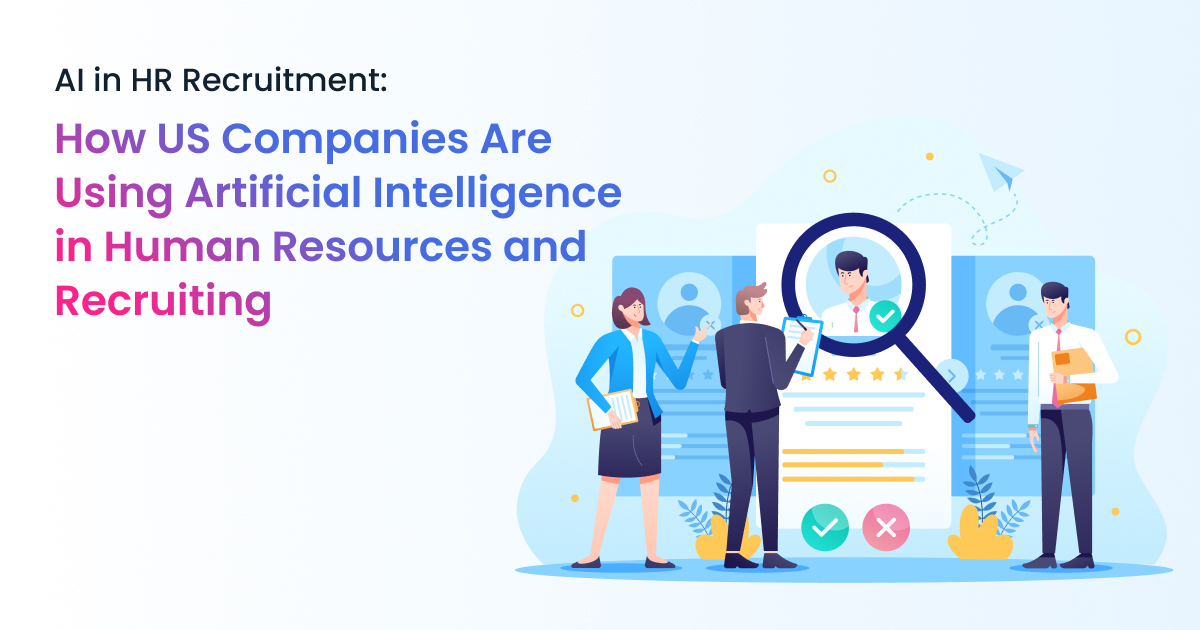
Artificial intelligence is reshaping how companies find, evaluate, hire, and retain talent. In the context of AI in HR recruitment, organizations are no longer relying on manual resume screening or subjective judgment alone. Instead, they increasingly turn to intelligent systems that can process large volumes of data, spot patterns, and recommend better hiring decisions.
This shift matters especially in the US market where competition for skilled talent is intense. Businesses that leverage AI see benefits in speed, quality of hire, and candidate experience. In this article, we’ll explore how artificial intelligence is transforming human resources and recruiting, what kinds of HR tech integrations matter, the role of API for hiring, and how AI recruiting systems work in practice.

Why AI Matters in Human Resources and Recruiting
Artificial intelligence has moved from buzzword to business necessity in the world of HR. Recruiters often spend a large portion of their time on repetitive tasks such as screening resumes, scheduling interviews, and parsing candidate data. With AI technologies, these steps can be automated or enhanced.
According to a survey by Deloitte, 33 % of companies are already using AI for HR processes, and many more are planning to invest in the next few years. These applications reduce time-to-hire and help HR teams focus on strategic activities rather than administrative workload.
How AI Recruiting Systems Improve Hiring Outcomes
AI recruiting refers to systems that incorporate machine learning, natural language processing, and predictive analytics into the hiring process. These systems help HR teams in several ways:
- Automated Resume Screening: Traditional resume reviews can be slow and inconsistent. AI tools analyze resumes for skills, experience, and job fit faster and with less bias than manual sorting. They can identify relevant patterns that keyword searches miss.
- Candidate Matching: AI algorithms match candidates with job descriptions based on deeper semantic understanding rather than simple keyword overlap. This results in smarter shortlists and higher-quality matches.
- Chatbots and Candidate Engagement: Conversational AI can communicate with candidates in real time, answer questions, schedule interviews, and keep prospects engaged throughout the process.
These capabilities lead to measurable improvements in recruiting efficiency. Companies using AI recruiting solutions often report shorter hiring cycles and increased candidate satisfaction.
HR Tech Integrations That Make AI Work
One key to success with AI in HR is integrating it with other HR systems. AI doesn’t operate in a vacuum. To deliver real value, it needs access to accurate and comprehensive data.
Here are some common HR tech integrations:
- Applicant Tracking Systems (ATS): Most AI recruiting tools connect with ATS platforms. This integration lets AI systems analyze candidate pipelines, flag top performers, and track analytics across hiring stages.
- HR Information Systems (HRIS): Connecting AI tools to HRIS platforms allows talent data to flow between recruitment and broader HR functions such as onboarding, performance management, and employee development.
- Calendar and Scheduling Tools: Integrations with calendar systems automate interview coordination, reducing manual work and improving candidate experience.
- Communication Platforms: Linking AI recruiting tools with email and messaging systems helps orchestrate personalized candidate outreach and follow-up.
These integrations create seamless workflows. For example, when an ATS shares candidate data with an AI engine, the system can produce insights such as predicted job success or cultural fit scores.
The Role of API for Hiring
APIs (Application Programming Interfaces) play a central role in modern HR ecosystems. They allow different applications to communicate and share data.
In hiring, APIs support:
- Data Exchange Between Systems: APIs enable ATS, HRIS, assessment tools, and AI recruiting platforms to exchange candidate and job data in real time. This unified view helps organizations make informed decisions.
- Custom Workflows: Businesses can use APIs to build or customize workflows that match their unique hiring processes. For example, they can pull candidate scores from an AI model and feed them directly into internal dashboards.
- Scalable Automation: APIs help automate tasks like job posting distribution across multiple job boards, resume parsing, and candidate follow-ups without manual intervention.
By leveraging APIs, companies avoid data silos and ensure that hiring technology works as a cohesive machine rather than a set of individual tools.
Practical Examples of AI Recruiting in Action
AI recruiting solutions come in many forms. Some popular approaches include:
- Predictive Analytics Tools: These systems analyze past hiring data to forecast candidate success, recommend interview questions, or suggest compensation ranges based on market trends.
- Semantic Search Engines: Unlike simple keyword search, semantic search understands context. This improves resume relevance scoring and helps recruiters find candidates whose profiles may not match keywords exactly.
- Chatbots for Screening: AI chatbots can pre-qualify candidates by asking structured questions, collecting responses, and scoring applicants based on predefined criteria. This gives recruiters a refined pool to review.
One US-based example comes from leading tech companies that use proprietary AI systems to predict which candidates are most likely to succeed based on historical hiring data. These systems have cut screening times by up to 50 % in some cases and increased the quality of shortlisted candidates.
Benefits of Using AI in HR Recruitment
The advantages of adopting AI in HR are significant:
- Reduced Time to Hire: Automation accelerates processes like resume screening and interview scheduling, shortening the recruitment cycle.
- Improved Candidate Quality: AI matching and ranking help surface more relevant candidates sooner in the process.
- Better Candidate Experience: Chatbots and automated communication keep candidates informed and engaged.
- Data-Driven Decisions: AI provides analytics and insights that inform hiring strategy and reduce reliance on intuition.
These outcomes contribute to better hiring ROI and stronger teams that align with business goals.
Challenges and Ethical Considerations
Despite the clear advantages, AI in HR recruitment carries challenges:
- Bias and Fairness: AI models trained on biased data can perpetuate existing inequities if not carefully audited.
- Data Privacy: Handling personal data requires compliance with laws such as GDPR and CCPA. Organizations must secure candidate data and manage consent responsibly.
- Skill Gaps: HR teams need training to interpret AI outputs effectively and integrate them into decision-making processes.
To address these concerns, companies often couple AI tools with human oversight, transparent evaluation criteria, and ongoing audits of model performance.
Future Trends in AI and Recruiting
The future of AI in HR recruitment will likely involve even deeper integrations and more personalized hiring experiences. Some emerging trends include:
- Contextual AI Models: These will understand roles and candidate profiles at a deeper level, leading to more accurate matches.
- Bias Mitigation Tools: Vendors are developing new systems that proactively detect and correct for bias in training data and model predictions.
- Enhanced Workflow Automation: APIs will tie together hiring, onboarding, and performance systems, creating continuous talent lifecycle management.
These advancements promise a more efficient, fair, and intelligent approach to building teams.

Conclusion
In the modern US job market, artificial intelligence in human resources and recruiting is no longer optional. Organizations looking to scale talent acquisition must adopt AI recruiting systems, invest in HR tech integrations, and leverage API for hiring to create connected, efficient workflows.
From automation of repetitive tasks to smarter candidate matching, AI helps HR teams make better decisions faster. When implemented ethically and with proper oversight, these technologies deliver significant gains in hiring performance and candidate satisfaction.
Author
Ravikumar Sreedharan

CEO & Co-Founder, Expertshub.ai
Ravikumar Sreedharan is the Co-Founder of ExpertsHub.ai, where he is building a global platform that uses advanced AI to connect businesses with top-tier AI consultants through smart matching, instant interviews, and seamless collaboration. Also the CEO of LedgeSure Consulting, he brings deep expertise in digital transformation, data, analytics, AI solutions, and cloud technologies. A graduate of NIT Calicut, Ravi combines his strategic vision and hands-on SaaS experience to help organizations accelerate their AI journeys and scale with confidence.
Latest Post
Upwork Alternatives: Best Platforms to Hire and Find Work in 2026
AI Talent Sourcing Playbook for 2026 (How to Hire Top AI Talent Faster)