AI QA Testing Framework: What Test Coverage Should You Expect?


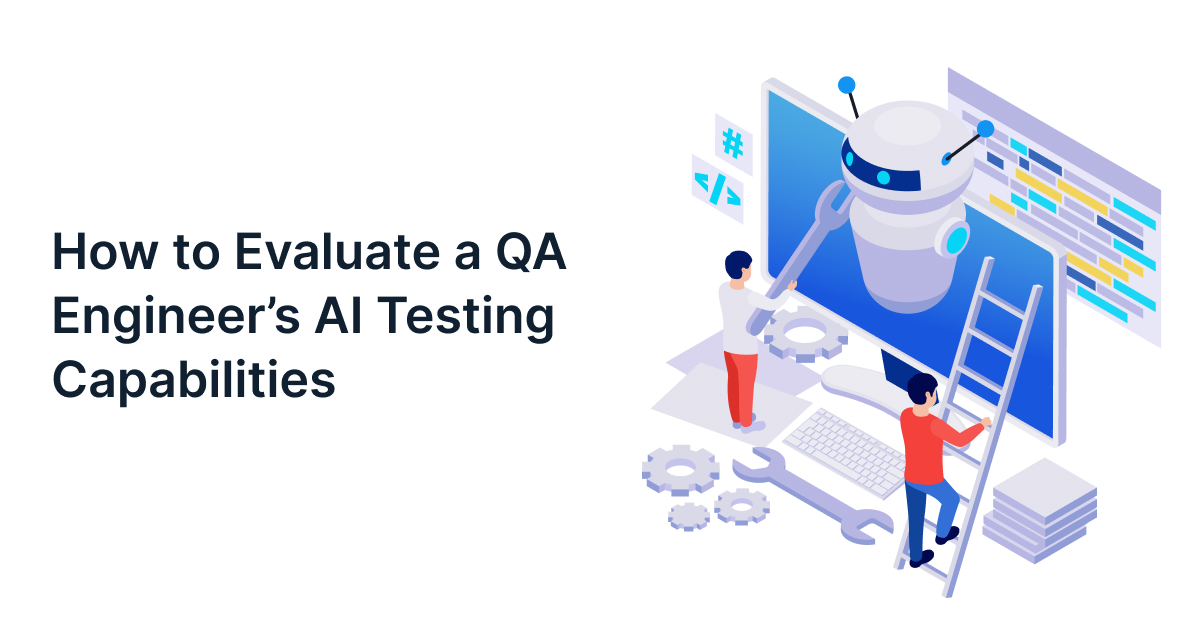
As AI systems move from experimentation to production, quality assurance becomes significantly more complex. Unlike traditional software, AI systems are probabilistic, data-driven, and continuously evolving. This means quality can no longer be defined only by correctness. It must be defined by reliability, robustness, fairness, and trust over time.
A strong AI QA testing framework helps teams answer a simple but critical question: do we understand how this AI system behaves, and can we manage the risks it introduces? This framework defines what meaningful AI test coverage looks like in real-world AI products.
Why AI QA Testing Needs a Structured Framework
Traditional QA assumes stability. Once tested, features are expected to behave consistently until code changes. AI breaks this assumption. Models can degrade due to data drift, retraining, or changes in user behavior.
Because of this, AI QA needs structure, not rigidity. A framework ensures testing is systematic rather than reactive, and that teams focus on risk rather than unrealistic guarantees.
Key principles behind an effective AI QA framework include:
- Prioritising risk reduction over absolute correctness
- Testing behavioural patterns instead of single outputs
- Combining quantitative metrics with qualitative judgment
- Treating QA as a continuous activity, not a release gate
Defining an Effective AI Model Test Strategy
A clear AI model test strategy sets the foundation for all testing activities. Before choosing tools or metrics, teams need to understand what the AI system does and what happens if it fails.
At this stage, QA leaders and product teams should align on:
- The type of AI system being tested (ML model, LLM, recommender, vision system)
- The decisions or actions influenced by the model
- Business, user, and regulatory risks associated with errors
This context determines how deep testing needs to go across performance, robustness, and fairness.

Functional Testing Coverage for AI Systems
Functional testing in AI focuses on validating expected behaviour across common scenarios. Unlike traditional functional tests, AI tests rarely check for exact matches. Instead, they evaluate whether outputs fall within acceptable ranges and align with intended outcomes.
Typical functional AI test coverage includes:
- Reasonable outputs for known input patterns
- Consistent behaviour across similar inputs
- Graceful handling of invalid or incomplete data
- Alignment between model outputs and business rules
The goal is to identify obvious failures without over-constraining the model.
Functional vs Non-Functional Testing in AI QA
Understanding functional vs non-functional AI tests is essential for balanced coverage. Functional tests validate behaviour. Non-functional tests evaluate how well the system operates under real-world conditions.
Non-functional AI testing often covers:
- Performance and latency under load
- Scalability across users and data volume
- Stability across model versions
- Explainability and transparency requirements
These tests protect user experience and system reliability, especially at scale.
AI Model Performance Testing Beyond Accuracy
AI model performance testing goes beyond tracking accuracy. While accuracy matters, it rarely tells the full story.
Meaningful performance evaluation includes:
- Precision and recall trends over time
- Confidence score distributions
- Performance by user segment or cohort
- Comparison between model versions
Tracking trends and deltas helps teams understand improvement, regression, and trade-offs.
Robustness Testing Coverage for AI Models
Robustness testing for AI focuses on how models behave when conditions are imperfect, which is almost always the case in production.
Robustness test coverage typically includes:
- Noisy, incomplete, or unexpected inputs
- Rare but high-impact edge cases
- Distribution shifts compared to training data
- Adversarial or manipulated inputs
This type of testing helps surface brittle behaviour before it impacts users.
Fairness and Bias Testing in AI QA Frameworks
Fairness is a core quality dimension for many AI systems. A clear fairness and bias testing ensures that models do not unintentionally disadvantage specific groups.
Bias testing may include:
- Performance comparison across relevant segments
- Detection of skew caused by data imbalance
- Monitoring fairness metrics after retraining
- Documenting acceptable and unacceptable disparities
Bias testing is not a one-time check. It requires ongoing monitoring as data and usage evolve.
Data-Centric Testing in AI QA Coverage
Many AI failures originate in data rather than models. An effective AI QA framework includes explicit data testing.
Key data coverage areas include:
- Data completeness and freshness
- Label consistency and disagreement rates
- Detection of data leakage
- Monitoring shifts in data distribution
Data-centric testing helps teams catch quality issues early, before model performance degrades.
Regression Testing Strategy for AI Models
Regression testing for AI focuses on behavioural consistency rather than identical outputs. Each retraining or model update should be evaluated carefully.
Effective AI regression testing includes:
- Comparing model versions on the same datasets
- Tracking performance shifts across key metrics
- Identifying unintended side effects of improvements
This supports safe, iterative model development.
Continuous Monitoring and Post-Deployment AI QA
AI QA does not end at release. Continuous monitoring is an essential part of the framework.
Post-deployment coverage typically involves:
- Drift detection and anomaly alerts
- Ongoing performance validation
- Periodic fairness and robustness checks
This feedback loop allows teams to respond proactively rather than reactively.
What “Good” AI QA Test Coverage Really Means
Good AI test coverage does not mean zero errors or perfect accuracy. It means risks are known, tested, and monitored. Teams understand where the model may fail and have mechanisms to detect and respond to those failures.
Coverage is about confidence, not certainty.
Scaling AI QA Capabilities
Many teams struggle to implement this framework due to limited AI QA expertise. Some build internal capability gradually, while others supplement with external specialists.
Platforms like expertshub.ai can support this by helping teams access AI QA experts who understand model behaviour, data risk, and fairness testing, especially when scaling QA frameworks across multiple AI products.

Final Thoughts
An effective AI QA testing framework balances structure with flexibility. It combines functional and non-functional testing, performance analysis, robustness checks, fairness validation, and continuous monitoring
By maintaining this balance, organizations can build AI systems that are not only powerful, but reliable and trustworthy, even as they evolve over time.
Frequently Asked Questions
Author
Ravikumar Sreedharan

CEO & Co-Founder, Expertshub.ai
Ravikumar Sreedharan is the Co-Founder of ExpertsHub.ai, where he is building a global platform that uses advanced AI to connect businesses with top-tier AI consultants through smart matching, instant interviews, and seamless collaboration. Also the CEO of LedgeSure Consulting, he brings deep expertise in digital transformation, data, analytics, AI solutions, and cloud technologies. A graduate of NIT Calicut, Ravi combines his strategic vision and hands-on SaaS experience to help organizations accelerate their AI journeys and scale with confidence.
Latest Post

AI Freelance Rates in 2026: How Much AI Freelancers Earn
AI Freelancing Trends in 2026: How AI Is Changing Freelancing