Fraud-Free AI Hiring: How to Build a Risk-Free and Secure AI Recruitment Process


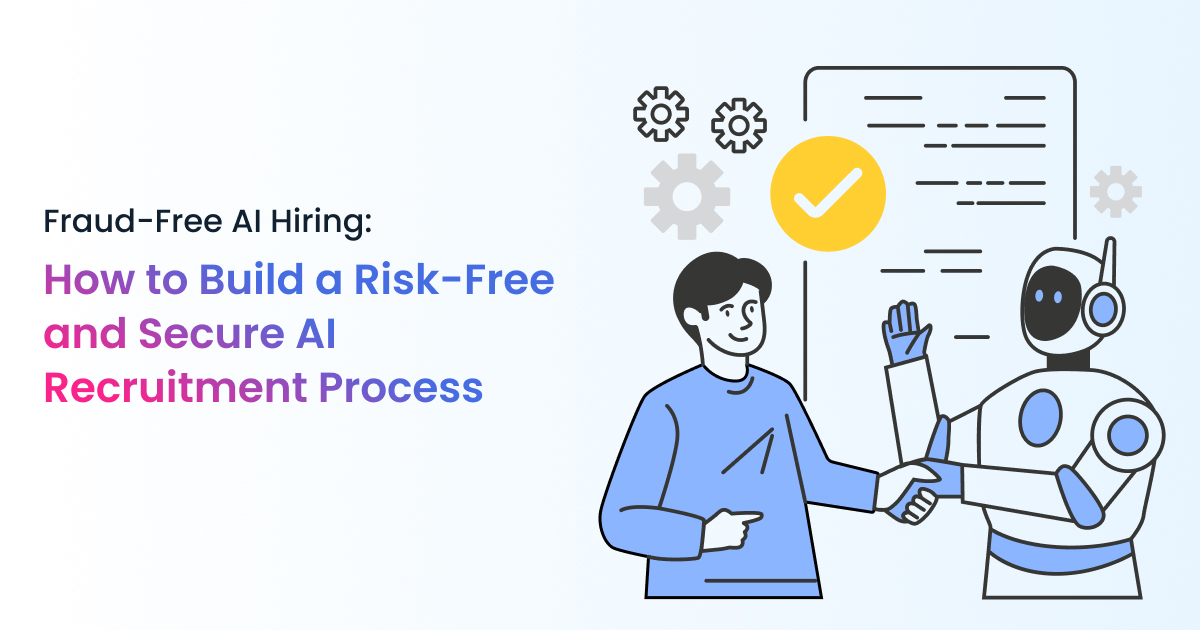
As artificial intelligence reshapes how companies hire talent, it has also introduced new risks. While AI can speed up sourcing, screening, and matching, it has simultaneously created opportunities for fraud. Fake candidate profiles, impersonation, resume manipulation using generative AI, and scam job postings are becoming increasingly common. This has made fraud-free AI hiring and risk-free AI hiring a priority for organizations operating in the US market.
Businesses today are not just asking how to hire faster. They are asking how to avoid scams in AI jobs, ensure secure AI recruitment, and build a safe AI hiring process that protects both employers and candidates. This is where AI-driven fraud detection becomes essential.

Why Fraud Is Rising in AI Recruitment
The growth of remote hiring and AI-powered recruiting tools has expanded the talent pool, but it has also widened the attack surface for fraud. According to the Federal Trade Commission, job and employment scams resulted in losses of over USD 367 million in 2022, with reported losses continuing to rise year over year as hiring increasingly moves online
AI has lowered the barrier for bad actors. Fake resumes can now be generated at scale, identities can be fabricated using deepfake images, and scam job listings can be posted quickly across multiple platforms. For employers hiring AI talent specifically, the risk is higher because roles are technical, remote, and often high-paying.
This environment makes traditional manual verification methods insufficient.
What Fraud-Free AI Hiring Really Means
Fraud-free AI hiring does not mean eliminating risk entirely. It means designing a recruitment process that proactively detects, prevents, and limits fraudulent activity at every stage of hiring.
A risk-free AI hiring approach combines intelligent automation with human oversight. It focuses on verifying identity, validating skills, and monitoring behavior patterns rather than relying solely on resumes or self-reported credentials. Secure AI recruitment is less about speed and more about trust.
In practice, this means using AI not just to hire talent, but to protect the hiring process itself.
Avoiding Scams in AI Jobs
Scams in AI hiring affect both employers and candidates. Fake candidates waste recruiter time and can lead to costly mis-hires. On the other side, fake job postings exploit job seekers by extracting personal information or upfront fees.
LinkedIn reported that it removes millions of fake accounts every week, many of which are linked to employment scams and fraudulent activity
A safe AI hiring process addresses this by verifying both sides of the marketplace. Legitimate platforms increasingly use identity verification, behavior analysis, and anomaly detection to flag suspicious activity before it causes damage.
How AI-Driven Fraud Detection Works in Recruitment
AI-driven fraud detection uses machine learning models to analyze signals that humans often miss. These systems look for inconsistencies across resumes, portfolios, communication patterns, and behavioral data.
For example, AI can detect when multiple candidate profiles share similar language patterns, project histories, or metadata, which often indicates automated resume generation. It can also identify unusual interview behavior such as delayed responses, scripted answers, or mismatched technical knowledge.
Behavioral biometrics are another growing area. These systems analyze how candidates interact with platforms, including typing patterns, response timing, and navigation behavior, to assess authenticity. Financial institutions already use similar methods to reduce fraud, and recruitment platforms are adopting them rapidly
Building a Secure AI Recruitment Framework
Secure AI recruitment relies on layered protection rather than a single control. Identity verification ensures the person applying is real. Skill validation ensures they can actually do the work. Ongoing monitoring ensures trust does not end at hiring.
APIs play a key role here. A modern hiring stack often integrates identity verification services, background check providers, assessment tools, and AI screening engines through APIs. This allows real-time checks without slowing down the candidate experience.
For example, integrating assessment APIs helps validate technical AI skills through live coding tests or project-based evaluations, which are much harder to fake than resumes. Identity APIs can verify government-issued IDs or professional credentials while staying compliant with privacy laws such as CCPA
Why Manual Checks Are No Longer Enough
Traditional hiring relied heavily on manual screening, reference checks, and interviews. In an AI-driven hiring environment, these steps alone are no longer sufficient. Generative AI can convincingly simulate experience, communication style, and even technical explanations.
A report by Gartner notes that by 2027, over 50 % of enterprises will rely on AI-enabled tools for fraud detection across digital workflows, including HR and recruitment
This shift reflects a broader understanding that fraud prevention must scale at the same pace as hiring automation.
The Role of Trust in Risk-Free AI Hiring
Risk-free AI hiring is not just about technology. It is about confidence. Employers need confidence that the person they hire is legitimate and skilled. Candidates need confidence that the opportunity is real and safe.
Platforms that emphasize transparency, clear verification steps, and secure payment or engagement models tend to earn higher trust. Escrow-based hiring models, verified profiles, and traceable work histories are increasingly common in secure AI hiring environments.
Trust becomes a competitive advantage in AI recruitment.
The Future of Fraud-Free AI Hiring
As AI hiring accelerates, fraud tactics will continue to evolve. The future of secure AI recruitment will depend on adaptive systems that learn continuously and respond in real time.
Expect stronger integrations between hiring platforms and fraud detection engines, more sophisticated behavioral analysis, and greater emphasis on explainable AI so hiring teams understand why candidates are flagged or approved.
Fraud-free AI hiring will not slow recruitment. It will make it more resilient.

Conclusion
Fraud-free AI hiring is no longer optional. In a market where scams, fake profiles, and fraudulent recruitment practices are rising, companies must build risk-free AI hiring processes that prioritize security as much as speed.
By combining AI recruiting tools with AI-driven fraud detection, secure integrations, and human oversight, organizations can avoid scams in AI jobs and create a safe AI hiring process that protects everyone involved.
Author
Ravikumar Sreedharan

CEO & Co-Founder, Expertshub.ai
Ravikumar Sreedharan is the Co-Founder of ExpertsHub.ai, where he is building a global platform that uses advanced AI to connect businesses with top-tier AI consultants through smart matching, instant interviews, and seamless collaboration. Also the CEO of LedgeSure Consulting, he brings deep expertise in digital transformation, data, analytics, AI solutions, and cloud technologies. A graduate of NIT Calicut, Ravi combines his strategic vision and hands-on SaaS experience to help organizations accelerate their AI journeys and scale with confidence.
Latest Post
AI Freelance Rates in 2026: How Much AI Freelancers Earn
AI Freelancing Trends in 2026: How AI Is Changing Freelancing