Why To Hire AI Personalization Engineers for E-Commerce Growth?


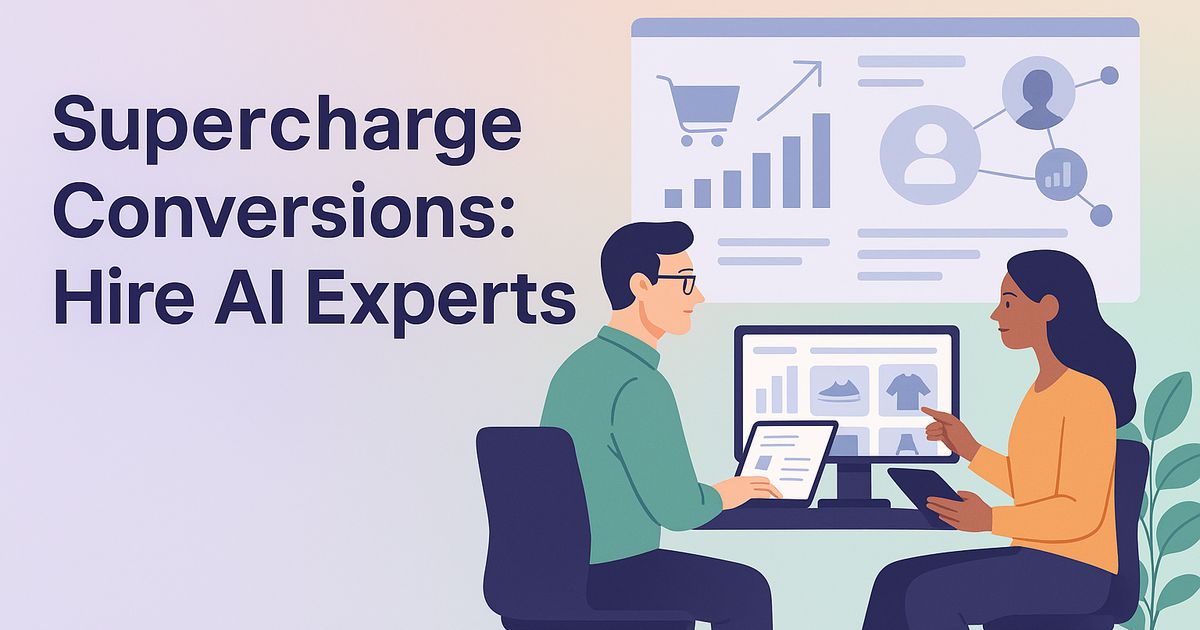
E-commerce businesses often struggle to implement effective AI personalization, leading to missed revenue opportunities and lower customer engagement. However, hiring the right AI personalization engineers can be a challenging task. Talent shortages and unclear qualification criteria put your investment at risk. Additionally, without a clear hiring and implementation framework, projects risk dragging on or failing to deliver tangible impact, which can undermine your competitive edge.
More and more, leaders in e-commerce recognize the growing importance of AI-powered solutions. In fact, over 80% of e-commerce leaders now consider personalization critical to business growth. To help navigate this evolving landscape, this guide provides a comprehensive qualification and implementation roadmap. This will empower decision-makers to confidently hire highly skilled professionals and maximize ROI using AI personalization strategies tailored for online retail success.

The E-Commerce AI Personalization Engineer Shortage: Why Is Hiring So Hard?
Why Demand Continues to Outpace Talent Supply
The rapid rise of AI-driven personalization tools from recommendation engines to dynamic pricing models has heightened the demand for skilled engineers with e-commerce expertise. Unfortunately, engineers who deeply understand both machine learning and e-commerce platforms remain highly scarce, causing recruitment cycles to lengthen and drive costs upward.
Common Challenges When Hiring for AI Personalization Engineering Roles
Companies face several pain points when hiring for AI personalization workers, which include:
- Vague job descriptions and unclear skill requirements,
- Candidates who overpromise without proven expertise,
- Fits that fail to align with complex e-commerce architectures, such as Shopify or Magento.
Many hires struggle with the full scope of AI personalization responsibilities, which span from data pipeline optimization to real-time customer segmentation—it’s critical to identify candidates with end-to-end expertise.
Salary & Market Benchmarks for AI Personalization Engineers in 2026
Understanding market salaries and regional variations is crucial for building competitive hiring strategies.
2026 Salary Ranges by Experience Level
Entry-level engineers command approximately $150K annually, while seasoned specialists with 5+ years often earn between $200K and $220K. Freelancers typically charge $80 6$150 per hour, depending on their expertise.
Geographic Variations: US, EU, and Asia
US-based engineers lead in compensation, followed closely by Western Europe, where rates are about 20-30% lower. Engineers in Asian markets offer competitive pricing but tend to vary more in quality, impacting project timelines and ongoing support.
| Hiring Model | Hourly Rate Range | Engagement Length | Support & Scalability |
|---|---|---|---|
| Freelancer | $80-$150 | Short-term/flexible | Limited long-term support |
| Full-time | $115K-$220K/year | Long-term | Higher integration & growth |
Top 5 Non-Negotiable Skills for AI Personalization Engineers in E-Commerce
To succeed in AI-powered personalization for online retail, AI engineers should demonstrate proficiency across several key technical areas:
1. Machine Learning & Recommendation Algorithms
Expertise in collaborative filtering, matrix factorization, and deep learning is essential to build personalized recommendations that increase conversions.
2. Data Engineering & Real-Time Processing
The ability to design scalable data pipelines that collect, clean, and process behavioral data in real-time supports dynamic offers and accurate customer segmentation.
3. E-Commerce Platform Architecture
Hands-on experience integrating AI models with Shopify, Magento, or custom e-commerce software enables seamless AI deployment without disrupting existing workflows.
4. Customer Behavior Analytics & Segmentation
A deep understanding of clustering, cohort analysis, and predictive analytics will help tailor unique customer journeys and continuously improve personalization strategies.
5. Production Deployment & Scalability
Strong knowledge of dockerization, cloud platforms (AWS, GCP, Azure), and performance monitoring tools is essential to ensuring AI models work reliably during traffic spikes and scale with customer demand.
Vetting Framework: How to Interview an AI Personalization Engineer
An effective hiring process should include a robust set of technical and real-world problem-solving questions:
Sample Technical Questions
- Explain the difference between content-based and collaborative filtering in AI personalization.
- How would you solve cold-start issues for new users in an e-commerce setting?
- Describe a scalable system for deploying real-time personalized product offers.
Key Red Flags to Spot When Evaluating Candidates
Avoid candidates who lack hands-on production deployment experience or cannot clearly explain how their AI recommendations impacted business KPIs. Answers that gloss over data quality or AI system integration raise concerns about competency and adaptability.
Scalability & Architectural Decision-Making
Make sure candidates can discuss architecture choices for scaling pipelines, model retraining frequency, and addressing latency—these are critical factors for maintaining a smooth AI-driven customer experience.
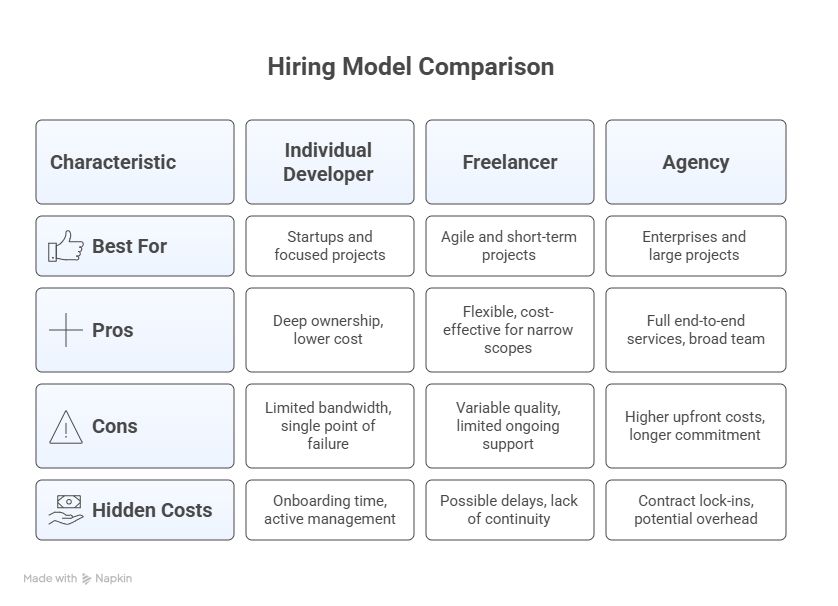
Hiring Model Decision Tree: Individual vs Freelancer vs Agency
Implementation Timeline & Phases for AI-Powered E-Commerce Personalization
A clear deployment roadmap is essential for achieving successful and timely AI integration:
Phase 1: Audit & Strategy (2-4 Weeks)
Evaluate existing data assets, business goals, and customer journey needs.
Phase 2: Data Preparation & Algorithm Selection (4-8 Weeks)
Clean datasets, engineer features, and select or train the most appropriate algorithms.
Phase 3: Development & Testing (8-16 Weeks)
Build, validate, and test AI models integrated with your e-commerce environment, including continuous A/B testing frameworks.
Phase 4: Deployment & Continuous Optimization (Ongoing)
Deploy the models at scale, set up monitoring, and constantly refine systems based on live data to maximize ongoing ROI.
Industry interviews from 2024 indicate that full AI deployment typically takes 1224 weeks to reach production-grade stability.
Expected ROI Metrics & How to Measure AI Personalization Success
AI personalization should improve several critical e-commerce KPIs:
Conversion Rate Lift
AI-driven personalization projects typically yield a 15-30% conversion rate increase within the first 6 months post-launch.
Average Order Value (AOV) Improvement
Personalized offers and dynamic pricing often increase AOV by 10-20%, leading to more profitable customer engagements.
Customer Retention
Leveraging AI segmentation for loyalty programs can improve long-term repeat purchase rates and customer lifetime value (LTV).
Payback Period
Many mid-sized retailers recoup AI personalization investments within 6 to 12 months, reflecting strong early business impact.
Common AI Personalization Implementation Pitfalls & How to Avoid Them
To help guarantee successful integration, be aware of these common challenges:
Poor Data Quality
Bad data, with duplicates, missing values or biases, will lead to underperforming personalization engines. Rigorous data preprocessing and validation should always be a priority.
Overfitting Historical Trends
Over-reliance on past transactions can make predictions obsolete. Incorporate real-time feedback loops for more adaptive and responsive AI systems.
Integration Delays from Legacy Systems
Incompatible APIs and brittle software infrastructure can stall AI initiatives. Conduct early technical assessments and feasibility studies to prevent long delays.
Lack of Ongoing Model Monitoring
Without continuous performance evaluation, AI models degrade over time, damaging user experiences. Develop automated alerting and scheduled retraining protocols.
Where to Hire & Platform Recommendations for AI Personalization Engineers
| Platform | Speed | Cost | Quality Assurance | Best for | Notes |
|---|---|---|---|---|---|
| LetsRemotify | 24-hour match | Medium | Vetted Candidates | Fast hires and startups | Specializes in rapid candidate shortlisting |
| Agicent | Moderate | Premium | Full Lifecycle Support | Enterprises scaling operations | Known for strategic consulting and development |
| MasterOfCode | Slow | Medium-High | Proven Results | Large projects seeking quality | Focused on e-commerce AI portfolios |
| Freelance Sites | Variable | Low-High | Varies | Small projects and flexible gigs | Watch out for inconsistent delivery/td> |
| In-House | N/A | High | Full Control | Large companies and scale | Highest cost, but offers full ownership and control |
Choosing the right platforms depends on project size, budget constraints, and the need for ongoing support and expertise.
Post-Hire: Onboarding & Integration Checklist for AI Personalization Engineers
The first 90-days after hiring are crucial for success—follow a structured onboarding plan:
First 30 Days
Set clear milestones for data environment access, baseline audits, and technical alignment.
First 60 Days
Complete initial prototype models and begin integrations with your e-commerce backend.
First 90 Days
Full feature rollout with automated reporting, model monitoring, and knowledge transfer to internal teams.
Ensure all documentation is detailed and allocate dedicated resources for ongoing training and support scaling.

Frequently Asked Questions (FAQ)
Conclusion: Leveraging AI Engineering Talent for E-Commerce Success
AI personalization is no longer a luxury; it’s an essential driver of growth in the online retail sector. However, true success hinges on a disciplined approach to hiring and implementing AI-driven personalization strategies.
This guide’s step-by-step qualification roadmap, refined vetting criteria, and proven implementation phases help marketing leaders, AI managers, and business owners confidently identify and onboard the high-impact engineering talent required today. By aligning hiring decisions with clear operational milestones, businesses accelerate their journey from AI experimentation to robust, data-driven personalization that leads to sustainable revenue growth.
Get started now by consulting with our AI personalization experts. Discover how a customized hiring strategy can transform customer engagements and give your e-commerce business a powerful competitive advantage.
Author
Ravikumar Sreedharan

CEO & Co-Founder, Expertshub.ai
Ravikumar Sreedharan is the Co-Founder of ExpertsHub.ai, where he is building a global platform that uses advanced AI to connect businesses with top-tier AI consultants through smart matching, instant interviews, and seamless collaboration. Also the CEO of LedgeSure Consulting, he brings deep expertise in digital transformation, data, analytics, AI solutions, and cloud technologies. A graduate of NIT Calicut, Ravi combines his strategic vision and hands-on SaaS experience to help organizations accelerate their AI journeys and scale with confidence.
Latest Post
Top Skills to Look for in Autonomous Systems Engineers
Essential Skills to Look for in Machine Learning Engineers