AI Freelancers vs In-House Teams: Which Is the Right Choice for Your Business?


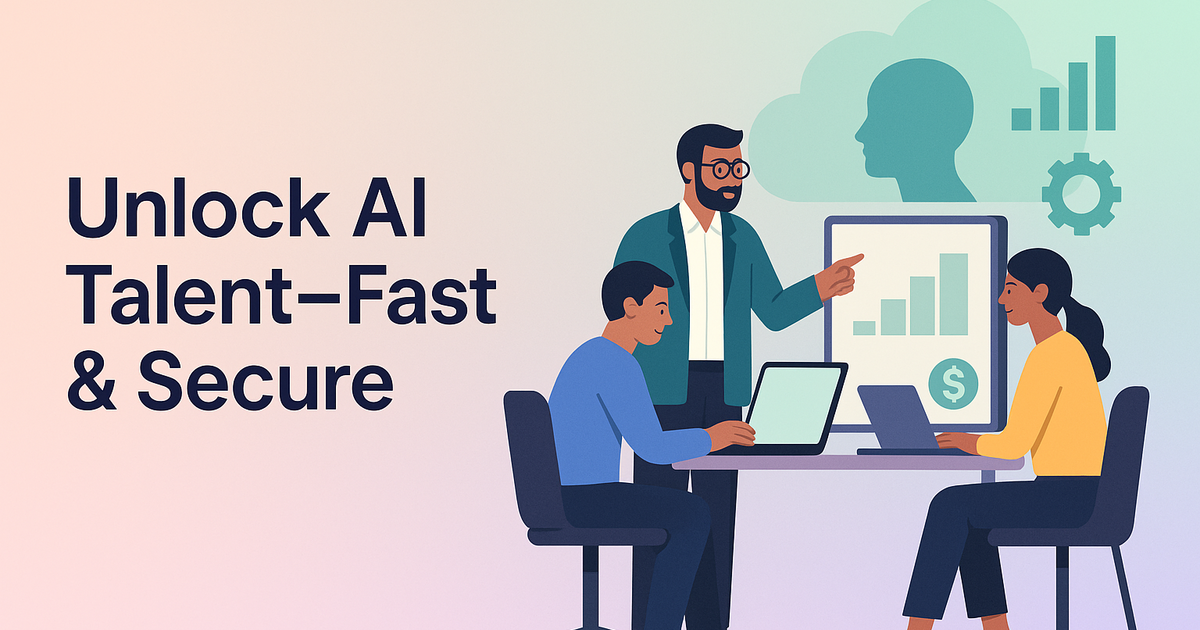
Choosing between AI freelancers and in-house teams is a critical strategic decision that can impact project timelines, budgets, and compliance. Selecting the wrong approach risks delays and cost overruns. With 73% of companies projected to use AI freelancers by 2025, understanding the trade-offs between long-term stability and short-term agility is essential. This article presents a strategic framework to help you determine the best AI resource strategy for your business.

AI Freelancers vs In-House Teams: A Strategic Framework for 2025
Aligning your AI talent acquisition strategy with project goals and organizational priorities is key to making an informed decision.
Define Your Project Scope and Duration
- Short-Term, Tactical Projects: Freelancers enable rapid prototyping and cost efficiencies due to minimal onboarding and lower overhead.
- Long-Term, Strategic Initiatives: In-house teams provide stability, continuous support, and deep integration necessary for scalable and secure AI solutions.
Match Skillsets and Collaboration Needs
- Freelancers focus on targeted skills for discrete projects but may lack institutional knowledge for ongoing development.
- In-house professionals cultivate organizational knowledge that fosters collaboration and sustained product growth.
Evaluate Organizational Culture and Compliance
- Companies emphasizing data security and intellectual property (IP) governance often benefit from dedicated in-house teams.
- Freelance engagements require rigorous contract management and compliance safeguards to mitigate risks.
AI Cost Breakdown: Short-Term Savings Vs Long-Term Investment
Understanding all expenses related to AI freelancers and in-house teams is crucial for effective budget planning and assessing total project cost.
| Cost Factor | Freelancers | In-House Teams |
|---|---|---|
| Hourly Rate | Generally lower (Five Jars, 2024) | Higher due to salaries and benefits |
| Onboarding Time | Days (Abbacus Technologies, 2025) | Weeks (Abbacus Technologies, 2025) |
| Total Cost for Short-Term (3-6 months) | Approximately 44% less (Abbacus Technologies, 2025) | N/A |
| Total Annual Cost | N/A | Approximately 28% more (Abbacus Technologies, 2025) |
Calculating Total Cost of Ownership: What to Consider
Beyond initial fees, consider hidden costs such as:
- Recruitment and onboarding expenses
- Project management overheads
- Maintenance, rework, and training needs
- Freelance platform fees (5–20% of rates)
A robust Total Cost of Ownership (TCO) model helps identify projects where freelancer savings align with long-term AI strategies.
Speed, Flexibility, and Quality: Which Model Delivers Best for AI?
Assessing project delivery capabilities guides your AI hiring approach.
Advantages of Hiring AI Freelancers
- Rapid deployment for experimental and pilot AI projects
- Cost-effective access to diverse domain expertise
- On-demand resource scaling without long-term commitments
Benefits of Building an In-House AI Team
- Stronger alignment with evolving organizational priorities
- Enhanced collaboration and knowledge consolidation
- Greater control over security, IP, and compliance
Read What Experts Say → The Ultimate Guide to Building Your First AI Team
Managing Risk, Security, and Intellectual Property Concerns
- Protecting sensitive data and IP is vital in AI talent acquisition:
- Freelancers may introduce vulnerabilities due to external access to sensitive information.
- In-house employees typically adhere strictly to company policies and regulatory frameworks.
Hybrid models require strong contracts, non-disclosure agreements (NDAs), and secure collaboration platforms to safeguard IP.
Hybrid Models: Getting the Best of Both Worlds in AI Development
A blended AI workforce combines in-house expertise with freelance specialists to balance cost and reliability.
- In-house teams ensure strategic consistency and product support.
- Freelancers enable rapid acquisition of niche skills during peak demands.
With proper project governance and planning, hybrid approaches offer a cost-effective and dependable solution.
Dive Deeper → How Hybrid Teams of Freelancers and In-House Staff Drive AI Innovation
Real-World Case Study: Insights from a Logistics Tech Startup (2025)
- Started with freelancers for MVP development to manage upfront costs.
- Transitioned to building an in-house AI team for scaling and ongoing management.
- Achieved a 30% faster project delivery and enhanced IP security.
Expert Opinions: Insights from Industry Leaders
- CTO at a leading AI FinTech firm endorses hybrid models to balance innovation speed and operational control.
- Project managers highlight onboarding duration differences impacting project pacing.
- Talent specialists note the 73% freelancer adoption forecast and emphasize AI-driven vetting as a success factor.

AI Project Checklist: How to Choose the Right Model
- Clearly define project timeline and milestones
- Assess internal skills gaps and resource capacity
- Evaluate regulatory, compliance, and IP considerations
- Calculate comprehensive TCO including hidden costs
- Consider hybrid models for flexible yet controlled workforce mix
- Prepare onboarding, compliance, and project governance protocols
Frequently Asked Questions (FAQ)
Closing Thought: How to Decide Between AI Freelancers and In-House Teams?
Choosing the optimal AI staffing strategy requires a data-driven, comprehensive assessment of cost, flexibility, pace, and risk tailored to your specific project needs and business goals. This ensures productivity gains without compromising security.
Let expertshub.ai be your trusted AI workforce advisor during this critical transformation. Our strategic hiring solutions develop tailored AI teams that drive innovation and empower your AI initiatives to succeed.
Connect today to discover how strategic talent acquisition can accelerate your AI journey.
Author
Ravikumar Sreedharan

CEO & Co-Founder, Expertshub.ai
Ravikumar Sreedharan is the Co-Founder of ExpertsHub.ai, where he is building a global platform that uses advanced AI to connect businesses with top-tier AI consultants through smart matching, instant interviews, and seamless collaboration. Also the CEO of LedgeSure Consulting, he brings deep expertise in digital transformation, data, analytics, AI solutions, and cloud technologies. A graduate of NIT Calicut, Ravi combines his strategic vision and hands-on SaaS experience to help organizations accelerate their AI journeys and scale with confidence.
Latest Post
Hiring an AI Product Manager: Skills, Interview Questions, and More
Building Computer Vision Applications: Team, Technology, and Process